Sewage Cleanup in Village of West Clay, IN
Category 3 cleanup in Village of West Clay, planned from photographs and moisture readings you can look over yourself
For Sewage Cleanup in Village of West Clay, Village of West Clay Water Restoration brings the equipment, the certifications, and the paperwork: 24/7 response, written scopes, and insurance claim support. Call (765) 676-3491 for dispatch.
- Service: Sewage Cleanup for Village of West Clay homeowners
- Service area: Village of West Clay, IN and surrounding areas
- Response time: Fast local response for Village of West Clay; live dispatch every hour of the year
- Licensed and insured (License #RC21100059)
- Serving Village of West Clay, IN since 2018
Expert Sewage Cleanup for Village of West Clay Homeowners
A toilet that overflowed with solids upstairs doesn't stay upstairs. The water carries contamination down through subfloor seams, into the ceiling cavity below and along the top plates of the walls. Village of West Clay Water Restoration dispatches to Village of West Clay calls within 2 hours, maps where the contamination traveled with meters and thermal imaging, and removes the porous material it reached so the rebuild starts from clean framing.
Before anyone steps into standing sewage, the crew looks at outlet height. Cords on the floor, power strips, appliances and the panel all get checked for contact with the water, and circuits that serve the wet area get shut off from a dry spot. Electrical work in your Village of West Clay home then waits for an electrician to confirm what can be turned back on.
Flooring comes up in the order it was laid. Carpet gets cut into strips and rolled with its cushion, and floating floors such as vinyl plank get lifted out in sections along with the underlayment. Glazed tile can sometimes stay once the grout lines and the bed under it check out. Village of West Clay Water Restoration then reads the subfloor in your Village of West Clay home before planning anything new.
A personal inventory makes the contents part of a claim easier. Walk through the affected rooms in your Village of West Clay home and write down what each damaged item was, with its brand and approximate age. Photograph labels and serial numbers before anything goes into a bag, and keep the list with your other claim papers.
The plumber cleared the line and the floor is still wet, which is the point to phone Village of West Clay Water Restoration. The crew will plan the cleanup and the drying for your Village of West Clay home around what the plumber found, starting with the source and the water line.
Signs You Need Sewage Cleanup
If you notice any of these in your Village of West Clay home, schedule a free inspection before the issue worsens.
Sewage smell coming out of the laundry tub or utility sink in the basement
Standing water in the crawl space with a sewage smell and insulation hanging down wet
Ejector pit alarm sounding, or the pump cycling while the water level stays up
Laminate or vinyl plank flooring lifting at the seams after a toilet overflowed with waste
Greasy black film left on the floor after standing water goes back down the drain
An extension cord or power strip sitting in standing water near the basement drain
Cardboard boxes on the basement floor with wicking stains and soft buckled bottoms
Waste tracked from the backup room onto dry carpet on shoes and paws
Carpet in the finished basement wet underfoot with a sour smell coming off it
Wet muddy residue on the basement slab fanning out from the floor drain
How Village of West Clay Water Restoration Handles Sewage Cleanup
We follow these steps in order on every Village of West Clay job.
Safety Walkthrough
Before anyone steps into standing water, the crew looks for outlets and cords touching it and shuts off the circuits that serve the wet area from a dry spot. The walkthrough also settles which doorway the crew uses, so traffic stays off clean floors.
Bulk Waste Extraction
Solids handling pumps and waste rated extraction units pull the standing sewage out into the truck tank. Equipment used on sewage jobs stays dedicated to that work. Hard surfaces get squeegeed down before removal work opens up the walls.
Porous Material Removal
Carpet cushion, wet insulation, baseboard and drywall above the moisture line come out and get bagged for disposal, with an inventory photographed for the claim. The cut height sits where meter readings justify it, usually a foot or two above the staining.
Ceiling and Cavity Opening
Where the water traveled down or into a wall, the crew opens the ceiling or the wall cavity until the readings come back dry. Wet insulation comes out, and the exposed framing is photographed before it gets cleaned.
Line follow up
After the cleanup, the plumber's camera inspection of the lateral shows why the line backed up. The crew adds those findings to your file, and it's a good moment to ask the plumber about a backwater valve.
Sewage Cleanup in Village of West Clay
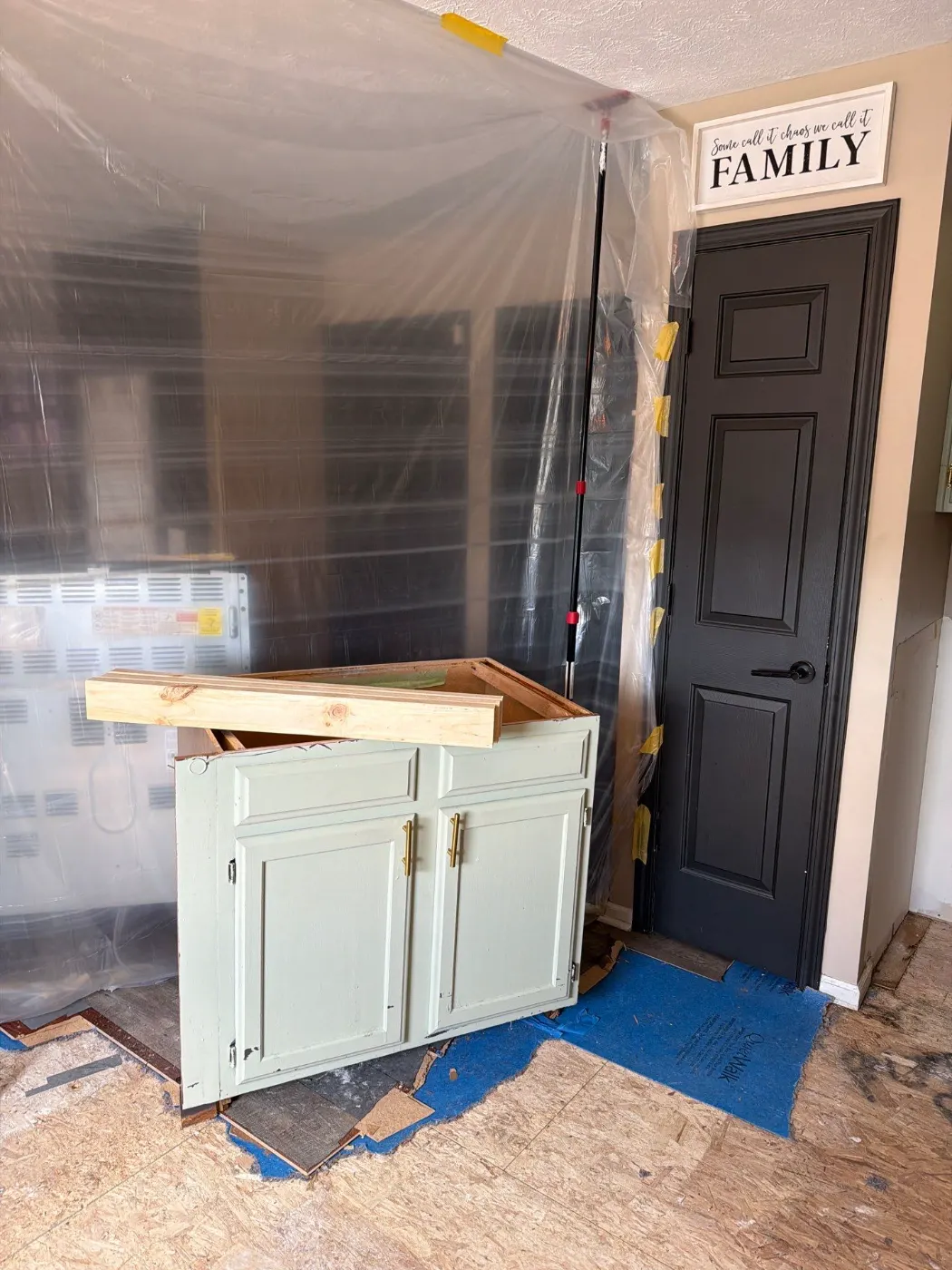
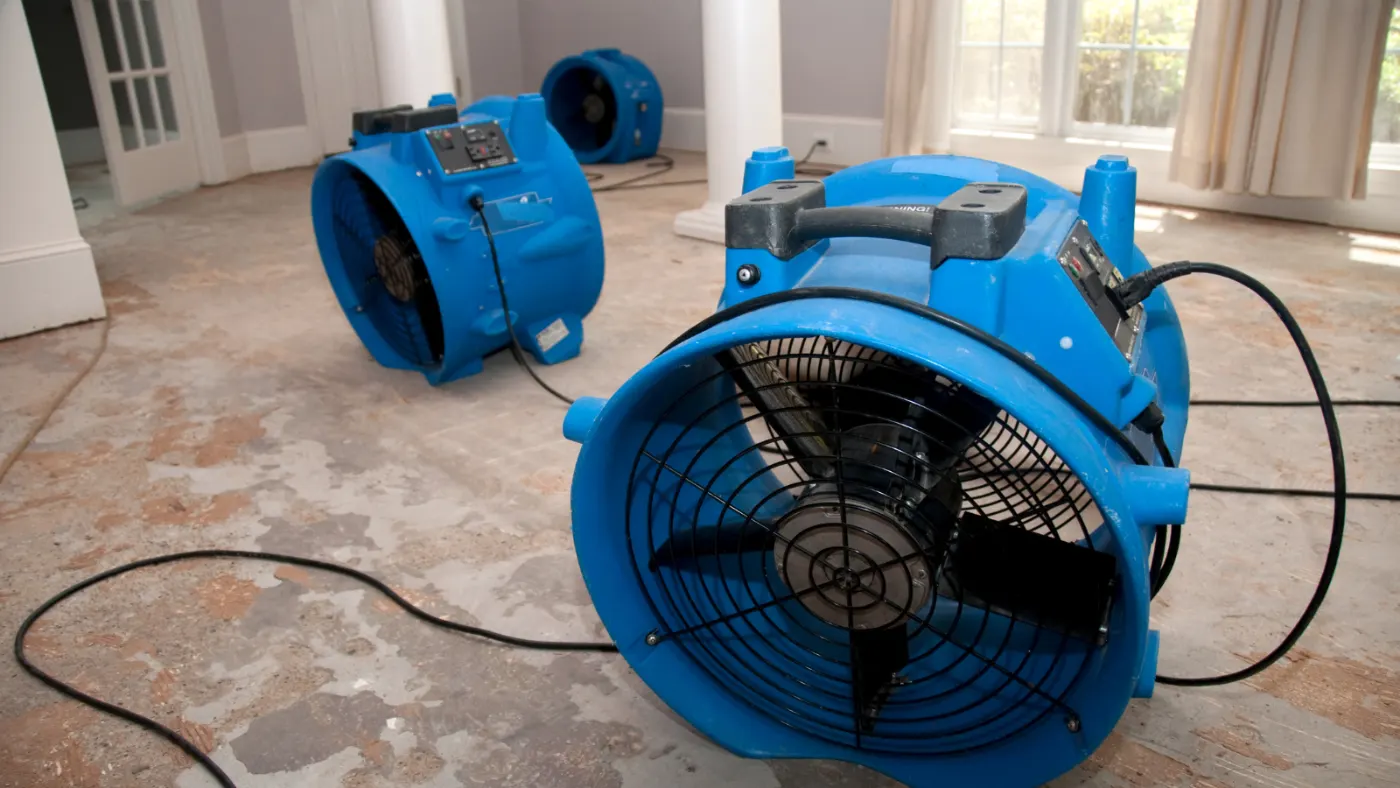
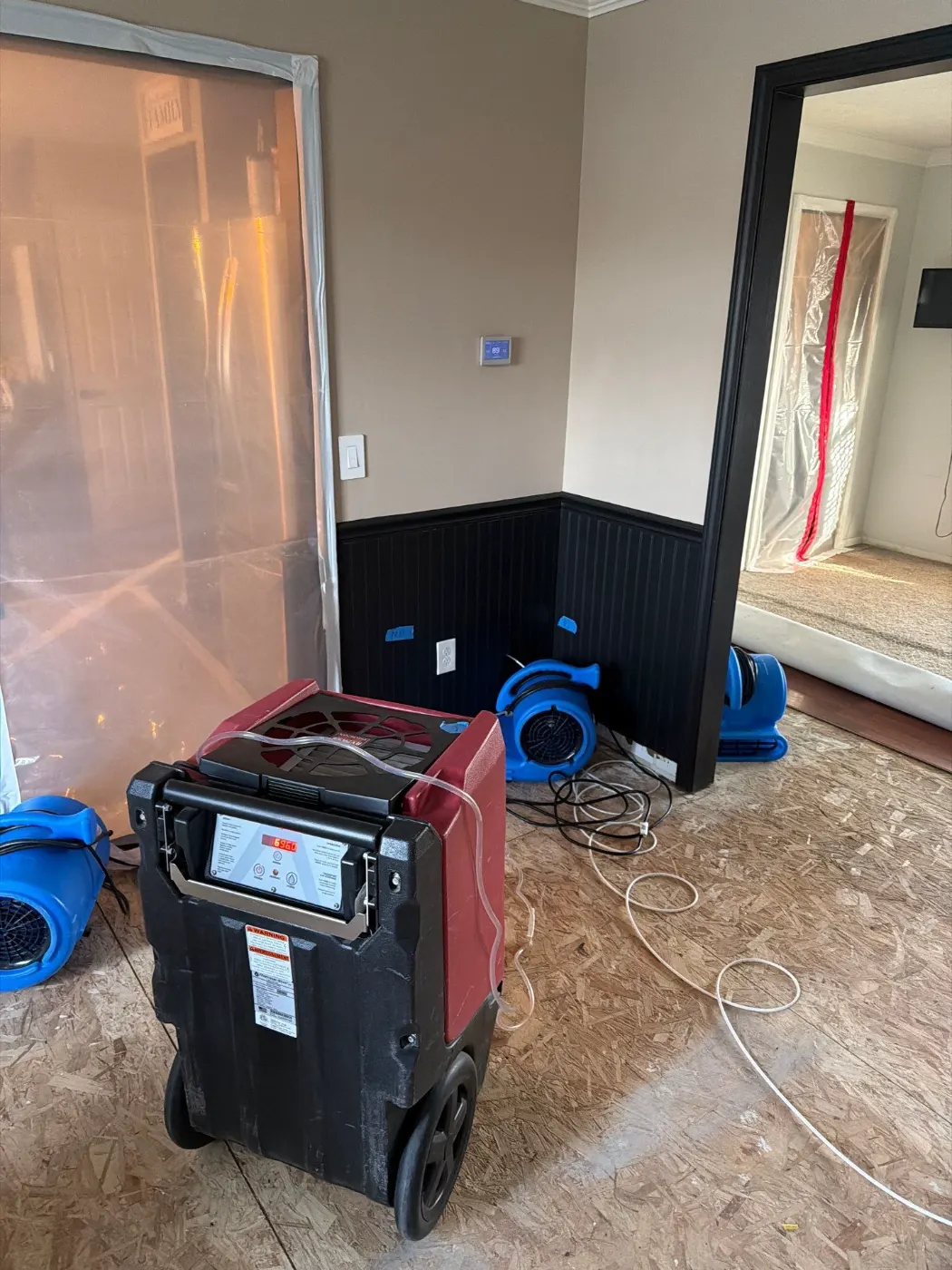
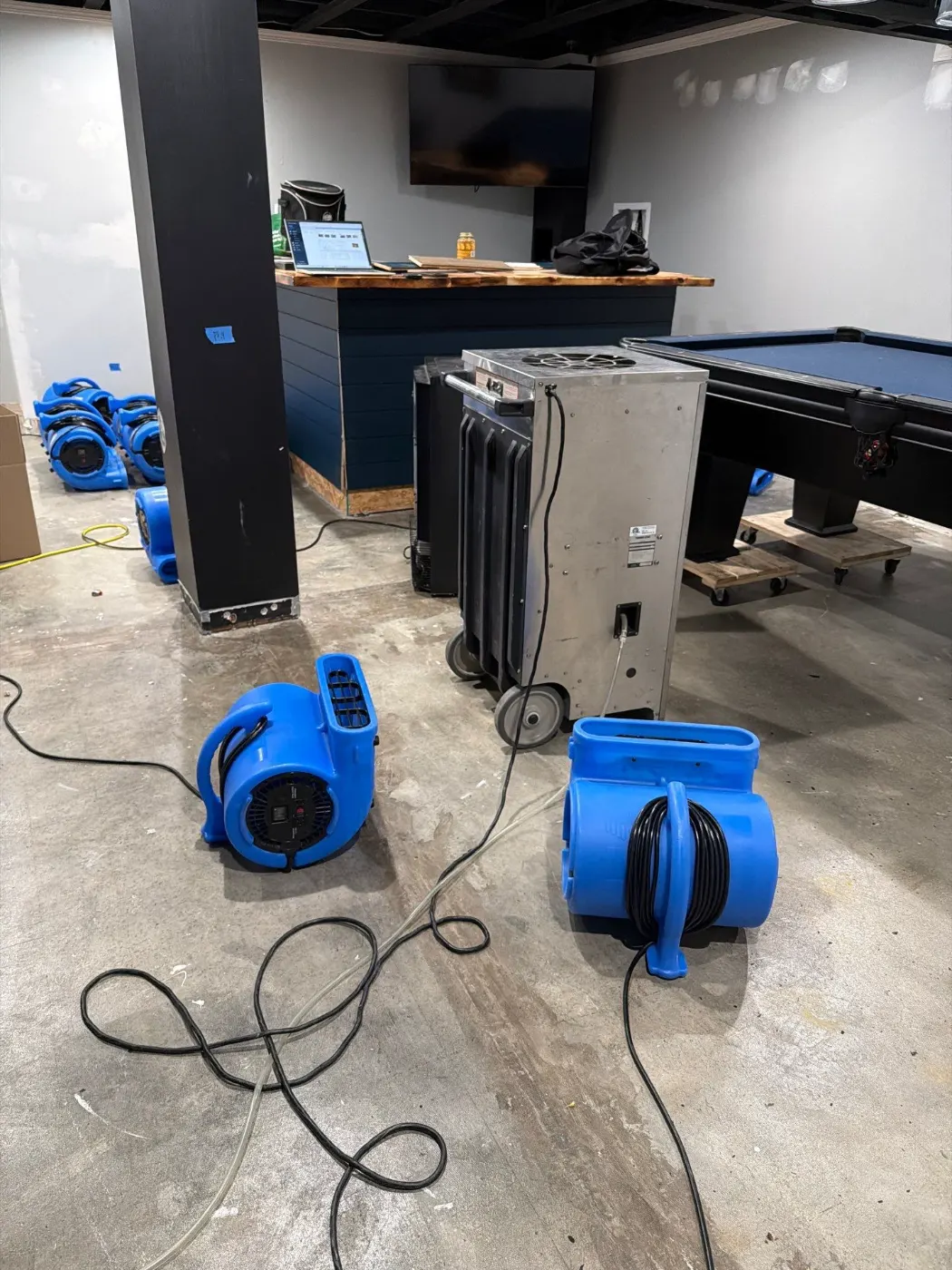
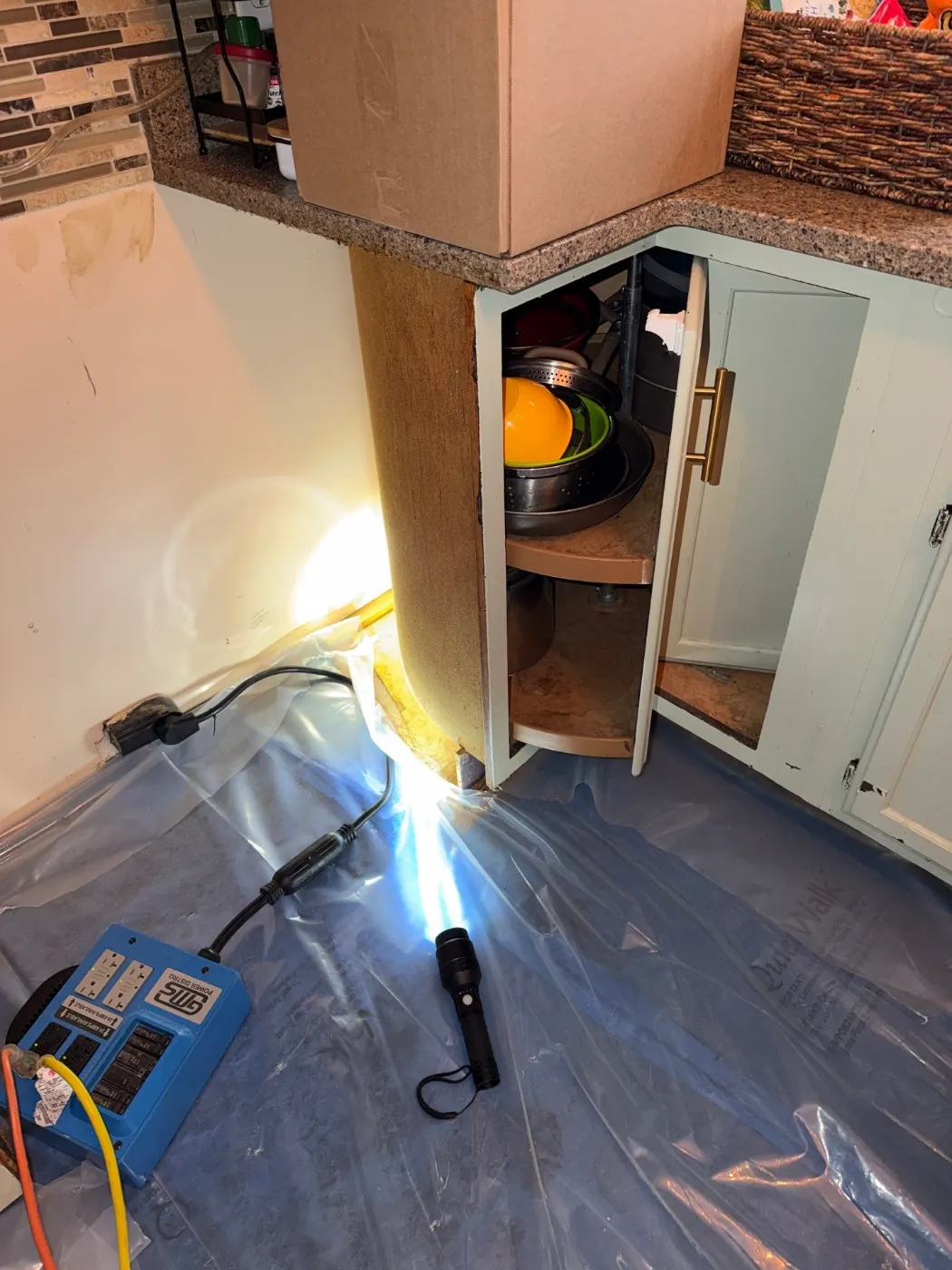
Photographs from real sewage cleanup jobs completed by our crew in Village of West Clay and surrounding areas.
Sewage Cleanup FAQ
Questions Village of West Clay homeowners ask us about sewage cleanup.
Guidance and Standards for Sewage Cleanup
- The ANSI/IICRC S500 is the published standard for professional water damage restoration. The current edition is the Fifth Edition, 2021. IICRC S500 Standard
- The Indiana Department of Insurance advises against permanent repairs before your insurance company inspects the damage. Check your own policy for what it covers. Indiana Department of Insurance: Insurance Claim Tips
Village of West Clay Neighborhoods We Serve
We take sewage cleanup calls in every part of Village of West Clay. Pick your neighborhood for local details.
Other Restoration Services in Village of West Clay
Village of West Clay Water Restoration handles the full scope of restoration work. Explore our other services below.
Water Damage Restoration in Village of West Clay
24/7 emergency response. IICRC certified water restoration from extraction to full dry out.
Learn more →Basement Flooding in Village of West Clay
Basement water emergencies handled fast. Extraction, drying, mold prevention.
Learn more →Storm Damage in Village of West Clay
Storm related water emergencies. Tarping, extraction, drying, and full restoration.
Learn more →Request Sewage Cleanup
Reach Us Directly
Our team is available 24/7 for emergencies and ready to schedule inspections during business hours.
Need Immediate Help?
For active water or mold emergencies, call us directly. We are available 24/7.